Blog / SUVs

Blog

All SUVs Sheridan Toyota Dealer 4Runner Sequoia TRD Pro
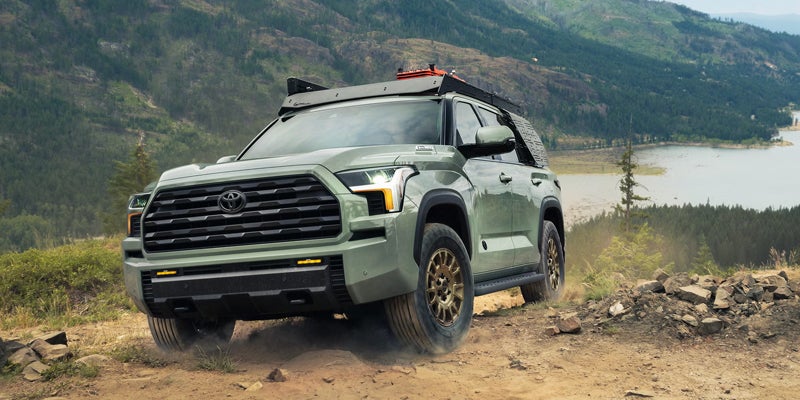
2027 Toyota Sequoia full-size hybrid SUV at Fremont Toyota Sheridan

What's New on the 2027 Toyota Sequoia

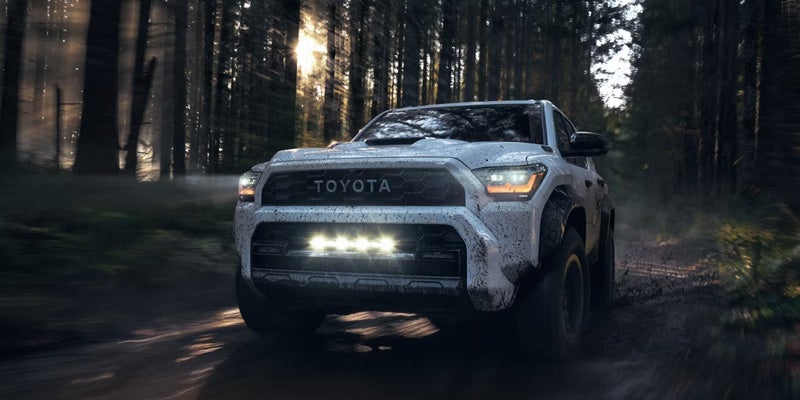
Here at Fremont Toyota Sheridan, our team has been fielding questions all fall from northern Wyoming families, ranchers, and weekend travelers asking what's new on the 2027 Toyota Sequoia. Toyota updated its full-size, three-row SUV for 2027 with sharper front-end styling, a brand-new Trailhunter overlanding package, upgraded suspension hardware on the TRD Pro, a standard 14-inch multimedia touchscreen on every grade, Toyota Safety Sense 4.0, and new trailer-assistance tech built for real towing conditions. Quick Look: 2027 Toyota Sequoia Updates New Trailhunter Package (SR5): Factory overlanding setup with Old Man Emu shocks, 18-inch matte-bronze wheels, all-terrain tires, front skid plate, recovery hooks, and locking rear differential. Standard 14-Inch Touchscreen & 12.3-Inch Digital Meter: Every grade now includes the 14-inch Toyota Audio Multimedia display with 5G connectivity and a built-in Drive Recorder Dash Cam. TRD Pro Suspension & Color Update: Gains Sequoia-specific FOX enhanced QS3 adjustable shocks, standard red tow hooks, and the exclusive Honeycomb exterior color. Toyota Safety Sense 4.0 & Trailer ADAS: Adds Automated Trailer Detection, Trailer Blind Spot Monitor, Trailer Lane Trace Assist, and updated Trailer Backup Guide. Refreshed Exterior Styling and New Trailhunter Package From the moment you walk up to the 2027 Sequoia on our lot at 1614 Coffeen Ave, the revised front-end geometry stands out. Toyota reshaped the lower bumper and integrated rectangular fog lights beneath grade-specific hexagonal grilles, giving each trim a distinct look whether you park at a downtown Sheridan storefront or a Bighorn Mountain trailhead. The headline addition for backcountry drivers around Sheridan, Buffalo, and Gillette is the new Trailhunter package, offered on the SR5 grade. Built directly at the factory for remote travel, the Trailhunter package equips the Sequoia with trail-ready hardware that used to require aftermarket installation: Old Man Emu (OME) Off-Road Suspension: Tuned shocks designed to manage washboard Forest Service roads and rocky inclines. Wheels, Tires, and Armor: 18-inch matte-bronze flow-formed aluminum wheels with TOYOTA heritage center caps, 265/70R18 Michelin LTX Trail all-terrain tires, a Trailhunter front skid plate, and front recovery hooks. Traction & Lighting: Electronically controlled locking rear differential, Multi-Terrain Select, Crawl Control, Rigid Industries LED color-selectable fog lights, and rear hatch cargo lights. TRD Pro Upgrades: FOX QS3 Shocks and Honeycomb Paint For drivers who want purpose-built off-road hardware straight out of the box, the 2027 Sequoia TRD Pro steps up with newly designed, Sequoia-specific FOX enhanced QS3 adjustable shocks (2.5-inch FOX Internal Bypass coil-overs and rear remote-reservoir shocks) paired with a TRD Pro front stabilizer bar and TRD aluminum front skid plate. Standard red-painted tow hooks come mounted up front, and buyers can now choose the new Honeycomb exterior color exclusive to TRD Pro alongside Ice Cap, Magnetic Gray Metallic, and Midnight Black Metallic. i-FORCE MAX Hybrid Power and New Trailer ADAS Every 2027 Toyota Sequoia runs on the i-FORCE MAX hybrid powertrain, pairing a 3.4-liter twin-turbo V6 with a parallel motor/generator and a 10-speed electronically controlled automatic transmission. That setup produces 437 net combined horsepower at 5,200 rpm and 583 lb-ft of torque at 2,400 rpm. Around Sheridan—where pulling a camper over US-14 or hauling a boat toward Tongue River Reservoir means steep grades and I-90 crosswinds—the 2027 Sequoia backs that torque up with up to 9,120 pounds of towing capacity when properly equipped. 2027 Sequoia Grade (4WD) Max Towing Capacity (SAE J2807, When Properly Equipped) Max Payload SR5 4WD 9,120 lbs 1,555 lbs Limited 4WD 9,020 lbs 1,485 lbs TRD Pro 4WD 9,020 lbs 1,435 lbs Platinum 4WD 9,010 lbs 1,410 lbs 1794 Edition 4WD 9,010 lbs 1,410 lbs Capstone 4WD 8,980 lbs 1,375 lbs Just as important for local haulers is Toyota's new Trailer ADAS (T-ADAS) suite, which works alongside the standard Class-IV hitch receiver, Integrated Trailer Brake Controller, and Trailer-Sway Control: Automated Trailer Detection: Rear radar and cameras automatically detect a connected trailer and measure its dimensions, feeding those specs into the redesigned Trailer Garage menu now located directly on the main multimedia screen. Trailer Blind Spot Monitor: Extends blind-spot detection past the Sequoia's body to cover the length of the attached trailer. Trailer Lane Trace Assist: Provides towing-tuned steering support to help keep the vehicle and trailer centered when lanes split or crosswinds push along the highway. Updated Trailer Backup Guide with Straight Path Assist: Features dynamic on-screen guidelines, a slider interface, and semi-automated steering support to help manage tight boat ramps and detect jackknife risk. Standard 14-Inch Screen, Drive Recorder, and TSS 4.0 Inside the cabin, Toyota removed the previous smaller base display so every 2027 Sequoia now comes standard with a 14-inch Toyota Audio Multimedia touchscreen and a 12.3-inch digital gauge display. Built on the new Arene software platform from Woven by Toyota, the system supports over-the-air updates, wireless Apple CarPlay and Android Auto, AT&T 5G connectivity, an always-on Quick Control menu, and available Digital Key smartphone access. Built-In Drive Recorder Dash Cam Standard across the 2027 lineup, this factory dashcam uses external vehicle cameras to capture 20-second manual or event-triggered clips with playback directly on the 14-inch touchscreen. Rear Seat Radar Reminder New for 2027, a headliner-mounted millimeter-wave radar can detect movement in the second or third row after parking and ignition off, triggering chimes, lights, or Safety Connect alerts. Every 2027 Sequoia also upgrades to Toyota Safety Sense 4.0 (TSS 4.0), which includes Pre-Collision System with Pedestrian Detection, Full-Speed Range Dynamic Radar Cruise Control, Lane Departure Alert with Steering Assist, Lane Tracing Assist, Road Sign Assist, Proactive Driving Assist, Automatic High Beams, Emergency Drive Stop System, Panoramic View Monitor, and Safe Exit Alert. For full manufacturer specifications, you can also review Toyota's official website. Three-Row Versatility, Lineup Grades, and Wyoming Tire Readiness Inside, the 2027 Sequoia seats seven or eight passengers depending on second-row bench or captain's chair configuration. Its sliding third row adjusts between 28.1 and 33.7 inches of legroom and pairs with a multi-level adjustable cargo shelf system, offering 22.3 to 11.5 cubic feet behind the third row, 49.0 cubic feet behind the second row, and 86.9 cubic feet behind the first row. The 2027 lineup spans six distinct grades—SR5, Limited, Platinum, 1794 Edition, TRD Pro, and Capstone—so you can match your cabin and hardware to how you drive in northern Wyoming. Because winter traction and gravel-road durability matter just as much as horsepower once snow hits I-90 or Red Grade Road, our Fremont Toyota Sheridan Tire Center stocks factory-spec all-terrain and winter tires tailored to each Sequoia wheel size, from 18-inch Trailhunter and TRD Pro setups up to 22-inch Capstone wheels. Every new 2027 Sequoia also includes ToyotaCare, covering normal factory-scheduled maintenance for one year or 10,000 miles (whichever comes first) and two years, unlimited mileage of Roadside Assistance. Frequently Asked Questions About the 2027 Toyota Sequoia What is the new Trailhunter package on the 2027 Toyota Sequoia? Available on the SR5 grade, the 2027 Sequoia Trailhunter package adds factory overlanding hardware including Old Man Emu off-road shocks, 18-inch matte-bronze wheels with Michelin LTX Trail all-terrain tires, a front skid plate, front recovery hooks, Rigid Industries color-selectable LED fog lights, and an electronically controlled locking rear differential. How much can the 2027 Toyota Sequoia tow? When properly equipped, the 2027 Toyota Sequoia achieves a maximum towing capacity of up to 9,120 pounds on the SR5 4WD grade (per SAE J2807 methodology), with 8,980 to 9,020 pounds across the rest of the 4WD lineup. Does every 2027 Toyota Sequoia have the 14-inch touchscreen? Yes. For 2027, the 14-inch Toyota Audio Multimedia touchscreen and 12.3-inch digital gauge cluster are standard across all six grades, along with Toyota Safety Sense 4.0 and the built-in Drive Recorder Dash Cam. See the 2027 Toyota Sequoia at Fremont Toyota Sheridan If you want to compare Sequoia grades in person, check trailer-hitch setups, or talk with a product specialist about incoming 2027 inventory, stop by our showroom at 1614 Coffeen Ave, Sheridan, WY 82801 or call us at (307) 763-5619. Our team is ready to help you find the right three-row Toyota SUV for Wyoming roads. Browse New Inventory Schedule a Test Drive Specifications, features, and equipment availability are based on official 2027 Toyota Sequoia product information and may vary by grade, configuration, and regional allocation. Maximum towing capacity requires proper equipment and adherence to SAE J2807 guidelines; cargo and load capacity are limited by weight and distribution. Contact Fremont Toyota Sheridan for current availability and details.

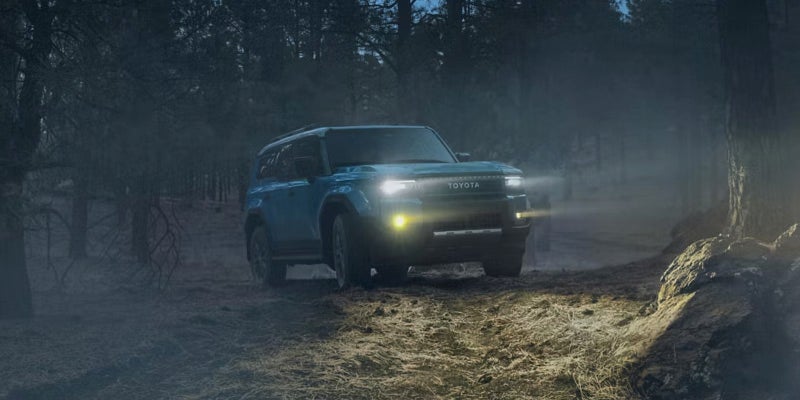
2026 Toyota Land Cruiser with Full-Time 4WD in Northern Wyoming

Toyota AWD vs. 4WD Systems Explained for Northern Wyoming

Prepared by: Fremont Toyota Sheridan Service & Technical Team • Dealership: 1614 Coffeen Ave, Sheridan, WY 82801 • Coverage: 2026 Toyota Lineup Quick Decision Guide: Toyota AWD vs. 4WD in Sheridan County Toyota builds five distinct All-Wheel Drive (AWD) and Four-Wheel Drive (4WD) architectures across its 2026 lineup. Selecting the right drivetrain in Northern Wyoming depends on whether your primary routes involve patchy black ice on Interstate 90 or deep, unplowed snowdrifts in the Bighorn Mountains: All-Wheel Drive (Dynamic Torque Control, Dynamic Torque Vectoring, & Electronic On-Demand e-AWD): Engineered for automatic, zero-input traction across alternating bare asphalt, slush, and black ice on I-90 between Sheridan, Buffalo, and Gillette, or daily commutes along Coffeen Avenue and US-87. Full-Time 4WD (with Electronic Locking Center Differential): Combines continuous pavement-safe all-wheel traction with a two-speed transfer case ( 1.00:1 high / 2.57:1 low range). Built for mixed-surface mountain corridors like US-14 from Ranchester and Dayton up to Burgess Junction where dry pavement transitions abruptly into snowpack. Part-Time 4WD (4WDemand Two-Speed Transfer Case): Mechanically locks the front and rear driveshafts together in 4H and 4L. Built for low-traction snowpack, muddy Sheridan County ranch pastures, steep USFS trails off Red Grade Road, and heavy trailer hauling. Core Mechanical Differences: Why AWD and 4WD Behave Differently on Wyoming Roads The mechanical distinction between All-Wheel Drive and Part-Time Four-Wheel Drive centers on how engine torque is divided between the front and rear axles—and whether the drivetrain allows the front and rear wheels to rotate at different speeds when turning a corner on dry pavement. How Toyota AWD Works on Mixed Pavement Whenever a vehicle turns a corner, the front wheels travel a wider arc than the rear wheels and must spin faster. Toyota AWD systems use either an electronically controlled multi-plate coupling, twin rear torque-vectoring clutches, or an independent rear electric motor (MGR) instead of a locked mechanical transfer case. Sheridan Driving Advantage: You never have to flip a switch when windblown snow drifts across a single lane of I-90 near Lake DeSmet while the rest of the highway remains bone dry. The system varies front-to-rear torque automatically without binding in dry parking lots. How Toyota 4WD Works in Deep Snow & Steep Grades True 4WD systems on body-on-frame Toyota trucks and SUVs route power through a two-speed mechanical transfer case featuring a Low Range ( 4L) gear reduction ( 2.57:1 on Tacoma, 4Runner, and Land Cruiser; 2.640:1 on Tundra and Sequoia). Sheridan Driving Advantage: Low-range gearing multiplies engine torque at low wheel speeds for crawling through deep snow ruts in Bighorn National Forest, descending steep icy switchbacks on US-14A without overheating brake rotors, or pulling a stock trailer out of a muddy corral. Toyota's Three All-Wheel Drive (AWD) Architectures Explained Toyota calibrates three distinct AWD systems for its unibody crossovers, sedans, and hybrid family haulers. Each system addresses specific Northern Wyoming commuting and fuel-efficiency priorities: Electronic On-Demand All-Wheel Drive (e-AWD): Standard on the 2026 RAV4 Hybrid (LE, XLE Premium, SE, XSE, Woodland, and Limited AWD), Corolla Cross Hybrid, Prius AWD, Camry AWD, Sienna AWD, and Grand Highlander Hybrid (2.5L Hybrid LE, XLE, Limited, and Nightshade). Instead of a heavy mechanical propeller shaft running from the transmission to the rear axle, e-AWD mounts an independent interior permanent-magnet rear electric motor (producing 89 lb.-ft. of rear motor torque on the 2026 RAV4 Hybrid) directly between the rear wheels. When accelerating from a frosty stoplight on Main Street or encountering black ice on an I-90 overpass, the rear electric motor applies immediate torque to the rear tires before front-wheel spin can build. On the 2026 RAV4 Hybrid, this system delivers an EPA-estimated 45 city / 39 highway / 42 combined mpg on XLE Premium and XSE AWD trims (41 city / 36 highway / 39 combined mpg on Woodland AWD with factory all-terrain tires and 8.5 inches of ground clearance). Dynamic Torque Control AWD: Equipped on gas-powered 2026 Grand Highlander AWD trims (LE, XLE, Limited, and Platinum with the 265-hp / 310 lb.-ft. 2.4L turbocharged four-cylinder engine) and the 2026 Highlander XLE AWD. Under steady highway cruising between Sheridan and Gillette, the system operates in 100% front-wheel drive to conserve fuel (achieving an EPA-estimated 21 city / 27 highway / 23 combined mpg on Grand Highlander Gas LE/XLE AWD). The moment wheel-speed, yaw-rate, or steering-angle sensors detect front slip, an electromagnetic coupling positioned ahead of the rear differential engages to send up to 50% of available torque to the rear axle. Dynamic Torque Vectoring AWD (DTV-AWD) with Driveline Disconnect: Standard on 2026 Highlander XSE, Limited, and Platinum AWD grades (paired with the 265-hp 2.4L turbocharged engine and 8-speed automatic transmission, rated at an EPA-estimated 21 city / 28 highway / 24 combined mpg). DTV-AWD upgrades the rear differential with independent left and right electromagnetic couplings. Beyond splitting torque up to 50:50 front-to-rear, it actively distributes rear axle torque from 0:100 to 100:0 between the left and right rear wheels to sharpen cornering stability on winding mountain highways. When AWD is not needed on dry interstate stretches, a dog-clutch driveline disconnect physically decouples the central driveshaft to eliminate parasitic rotational drag. Full-Time Electronic AWD (Hybrid MAX): Standard on 2026 Grand Highlander Hybrid MAX (Limited and Platinum AWD) and Toyota Crown Platinum. Combining a 2.4L turbocharged engine and front electric motor with a high-output rear eAxle motor, the Grand Highlander Hybrid MAX generates 362 net combined horsepower and 400 lb.-ft. of net combined torque at 2,000–3,000 rpm. It varies front-to-rear torque between 70:30 and 20:80 continuously, delivering a 5,000-lb. maximum towing capacity when properly equipped alongside an EPA-estimated 26 city / 27 highway / 27 combined mpg. Toyota's Two Four-Wheel Drive (4WD) Systems Explained For body-on-frame trucks and SUVs built on the TNGA-F global truck platform—including the 2026 Tacoma, 4Runner, Land Cruiser, Tundra, and Sequoia—Toyota offers two distinct mechanical 4x4 transfer case architectures: 1. Part-Time 4WD (4WDemand) with Two-Speed Transfer Case Part-Time 4WD is the workhorse drivetrain on core 4x4 grades of the 2026 Tacoma (SR, SR5, TRD Sport, TRD Off-Road, TRD Pro, and Trailhunter), 2026 4Runner (SR5, TRD Sport, TRD Off-Road, TRD Pro, and Trailhunter), 2026 Tundra 4x4, and 2026 Sequoia 4x4. Drivers control the electronically actuated two-speed transfer case via a console dial with three positions: 2H (Two-Wheel Drive High): Routes 100% of engine torque to the rear axle, supported by Toyota's Automatic Limited-Slip Differential (Auto LSD), which uses brake intervention to control single-wheel spin on wet or dusty pavement. 4H (Four-Wheel Drive High, 1.00:1 Ratio): Can be engaged electronically on the fly at highway speeds (up to 60 mph). Shifting into 4H mechanically locks the front and rear driveshafts together at an exact 50:50 rotational speed. Use 4H on snow-packed highways, gravel Sheridan County ranch roads, mud, or ice. Important Mechanical Rule: Because there is no center differential in a Part-Time 4WD transfer case, never drive in 4H on dry, bare pavement—tight turns on high-grip asphalt will cause the drivetrain to bind and hop. 4L (Four-Wheel Drive Low, 2.57:1 on Tacoma/4Runner or 2.640:1 on Tundra/Sequoia): Engaged while stopped in Neutral, 4L multiplies engine torque by more than 2.5 times at the wheels. Combined with Active Traction Control (A-TRAC) and the electronically controlled locking rear differential (standard on TRD Off-Road, TRD Pro, and Trailhunter trims), 4L forces both rear wheels to turn at the exact same speed to pull through deep snowdrifts or steep, rocky climbs in the Bighorns. 2. Full-Time 4WD with Electronic Locking Center Differential Full-Time 4WD is standard on every 2026 Toyota Land Cruiser (1958 and Land Cruiser grades), standard on the 2026 4Runner Platinum (and i-FORCE MAX 4Runner Limited), and standard on the 2026 Tacoma Limited with i-FORCE MAX. This system bridges the gap between everyday AWD convenience and heavy-duty 4WD capability: Torsen Limited-Slip Center Differential (Unlocked Mode): In normal driving ( H4F), a center differential allows the front and rear driveshafts to rotate at different speeds during turns while continuously sending power to all four wheels. Drivers can leave the vehicle in Full-Time 4WD 365 days a year—including dry asphalt in downtown Sheridan, wet rain in Story, and patchy snowpack up US-14—with zero driveline binding. Electronic Center Differential Lock ( H4L & L4L): When climbing into deep snowpack around Burgess Junction or navigating unplowed two-tracks, pressing the center differential lock button mechanically locks the front and rear driveshafts into a rigid 50:50 split, matching the locked traction of a Part-Time 4WD truck in both high range ( 1.00:1) and low range ( 2.57:1). In addition, the 2026 Land Cruiser includes a standard push-button electronic locking rear differential for severe off-camber recovery situations. 2026 Toyota AWD & 4WD Specification & Capability Comparison Matrix Compare verified 2026 Toyota OEM specifications—including drivetrain architecture, transfer case ratios, ground clearance, and maximum SAE J2807 towing capacities when properly equipped—across our most popular Northern Wyoming models: 2026 Model & Grade Drivetrain System Powertrain & Output Transfer Case Ratio (High / Low) Ground Clearance Max Towing Capacity (When Properly Equipped) 2026 RAV4 Hybrid (LE, XLE Prem, SE, XSE, Woodland, Limited AWD) Electronic On-Demand AWD (e-AWD) with 89 lb.-ft. Rear Electric Motor (MGR) 2.5L Hybrid ECVT 236 Net Combined HP Single-Speed e-AWD (Trail & Snow Modes) 8.1 in. (8.5 in. Woodland) Up to 3,500 lbs. (1,750 lbs. LE AWD) 2026 Highlander AWD (XLE / XSE, Limited, Platinum) AWD (XLE) or Dynamic Torque Vectoring AWD (DTV-AWD) w/ Driveline Disconnect 2.4L Turbo 8AT 265 HP / 310 lb.-ft. Single-Speed AWD (MTS Dial on DTV-AWD) 8.0 in. Up to 5,000 lbs. 2026 Grand Highlander (Gas AWD / Hybrid AWD / Hybrid MAX AWD) Dynamic Torque Control AWD (Gas), e-AWD (2.5L Hybrid), or Full-Time Electronic AWD (Hybrid MAX) Gas: 265 HP / 310 lb.-ft. Hybrid: 245 Net HP Hybrid MAX: 362 Net HP / 400 lb.-ft. Single-Speed AWD (Multi-Terrain Select on AWD) 8.0 in. Up to 5,000 lbs. (Gas & Hybrid MAX) Up to 3,500 lbs. (2.5L Hybrid) 2026 Land Cruiser (1958 & Land Cruiser Grades) Full-Time 4WD w/ Electronic Locking Center Diff & Standard Rear Locking Diff 2.4L Turbo i-FORCE MAX Hybrid 8AT 326 HP / 465 lb.-ft. 1.00:1 High / 2.57:1 Low (3.583 Final Drive) 8.7 in. Up to 6,000 lbs. 2026 4Runner 4x4 (SR5, TRD Sport, TRD Off-Road, Limited, Platinum, TRD Pro, Trailhunter) Part-Time 4WD (SR5, Sport, Off-Road, Pro, Trailhunter) or Full-Time 4WD (Platinum & Avail. Limited) i-FORCE: 278 HP / 317 lb.-ft. i-FORCE MAX: 326 HP / 465 lb.-ft. 1.00:1 High / 2.57:1 Low (Rear Locker on Off-Road, Pro, TH) 8.1 in. (SR5) to 10.1 in. (TRD Pro / Trailhunter) Up to 6,000 lbs. 2026 Tacoma 4x4 (SR, SR5, TRD Sport, TRD Off-Road, Limited, TRD Pro, Trailhunter) Part-Time 4WD (Core Grades) or Full-Time 4WD (Limited i-FORCE MAX) i-FORCE: Up to 278 HP / 317 lb.-ft. i-FORCE MAX: Up to 326 HP / 465 lb.-ft. 1.00:1 High / 2.57:1 Low (Rear Locker on Off-Road, Pro, TH) Up to 11.5 in. (TRD Pro Running Clearance) Up to 6,500 lbs. (4x4 XtraCab i-FORCE) Up to 6,000 lbs. (i-FORCE MAX) 2026 Tundra 4x4 (SR, SR5, Limited, Platinum, 1794, TRD Pro, Capstone) 4WDemand Part-Time 4WD w/ Electronically Controlled 2-Speed Transfer Case i-FORCE 3.4L TT V6: Up to 389 HP / 479 lb.-ft. i-FORCE MAX: 437 HP / 583 lb.-ft. 1.000:1 High / 2.640:1 Low (3.31 Differential Ratio) 8.5 in. to 9.4 in. (Up to 11.2 in. Running Clearance) Up to 11,200 lbs. (4x4 Double Cab SR5) Up to 11,175 lbs. (4x4 CrewMax TRD Pro) 2026 Sequoia 4x4 (SR5, Limited, Platinum, 1794, TRD Pro, Capstone) 4WDemand Part-Time 4WD w/ Electronically Controlled 2-Speed Transfer Case i-FORCE MAX 3.4L TT V6 Hybrid 10AT 437 HP / 583 lb.-ft. 1.000:1 High / 2.640:1 Low (Rear Locker on TRD Pro & TRD Off-Road) 8.6 in. (9.1 in. TRD Pro) Up to 9,120 lbs. (SR5 4WD) Up to 9,020 lbs. (TRD Pro 4WD) Matching Your Drivetrain to Northern Wyoming Routes & Conditions Different highways and county roads around Sheridan County place very different mechanical demands on your vehicle's driveline. Here is how our technicians at Fremont Toyota Sheridan help local buyers match their daily routes to the right system: Interstate 90 Commutes (Sheridan to Buffalo, Ranchester, & Gillette): High-speed winter driving on I-90 frequently involves 75-mph stretches of dry pavement broken up by sudden ground blizzards, shaded canyon curves, and icy bridge decks over Goose Creek or Piney Creek. Best Match: Electronic On-Demand AWD (RAV4 Hybrid, Grand Highlander Hybrid), Dynamic Torque Vectoring AWD (Highlander Limited/Platinum), or Full-Time 4WD (Land Cruiser, 4Runner Platinum/Limited). These systems remain engaged at highway speeds and adjust torque automatically without requiring driver intervention. Climbing US-14 & US-14A Into the Bighorn Mountains: Ascending from Dayton (3,927 ft) past Steamboat Point toward Burgess Junction (8,040 ft) or Granite Pass (9,033 ft) combines steep 6% to 8% grades with tight switchbacks and packed snow. Best Match: Full-Time 4WD (2026 Land Cruiser, 4Runner Limited/Platinum) or Part-Time 4WD with Multi-Terrain Select (4Runner TRD Off-Road, Tacoma TRD Off-Road). Notice that on the 2026 4Runner and Tacoma, Multi-Terrain Select (MTS) now operates in both 4WD-High and 4WD-Low, allowing drivers to calibrate wheel-slip thresholds for packed snow and dirt even at moderate mountain speeds. Red Grade Road, Story Backroads, & Unplowed Ranch Two-Tracks: Deep, rutted snowdrifts, spring gumbo mud, and steep rocky forest service roads require high ground clearance (9.1 to 11.5 inches), low-range gear multiplication ( 4L), and mechanical differential locks. Best Match: Part-Time 4WD or Full-Time 4WD equipped with an Electronic Locking Rear Differential and Crawl Control (Tacoma TRD Off-Road / TRD Pro / Trailhunter, 4Runner TRD Off-Road / TRD Pro / Trailhunter, Land Cruiser, or Tundra TRD Pro). Winter Livestock, Horse Trailer, & Snowmobile Hauling: Pulling a loaded multi-place enclosed snowmobile trailer up the Bighorns or hauling cattle trailers across Sheridan and Johnson Counties requires a rigid boxed-steel frame, long wheelbase stability, integrated Trailer Brake Controller (TBC), and low-rpm turbocharged torque. Best Match: 2026 Tundra 4x4 (up to 11,200 lbs. 4x4 max towing capacity when properly equipped) or 2026 Sequoia 4x4 (up to 9,120 lbs. 4WD max towing capacity when properly equipped) with 4WDemand Part-Time 4WD and 583 lb.-ft. of i-FORCE MAX torque at 2,400 rpm. Cold-Weather Driveline Care & Service at Fremont Toyota Sheridan Sub-zero temperatures in Northern Wyoming place heavy thermal and mechanical loads on differentials, transfer cases, and tires. Our factory-certified Toyota technicians at 1614 Coffeen Avenue recommend three key winter service practices to protect your AWD or 4WD system: Transfer Case & Differential Fluid Inspections: Trucks and SUVs that regularly tow trailers, plow through deep snow, or operate in 4H and 4L experience accelerated shear wear in front and rear differential gear oil and transfer case fluid. Using genuine Toyota synthetic low-viscosity gear lubricants prevents stiff shifting and cold-morning driveline drag at -20°F. Matching Tire Tread Depth Across All Four Corners: On AWD and Full-Time 4WD vehicles, running tires with uneven circumference (caused by skipping rotations or replacing only one damaged tire) forces the center coupling or Torsen differential to slip continuously, generating excess heat and premature wear. Regular 5,000-mile tire rotations keep tread depths uniform across both axles. Pairing AWD/4WD with 3PMSF Winter Tires: While AWD and 4WD dramatically improve forward acceleration on snow, all four-wheel-drive vehicles still rely on tire-to-road friction to steer and stop on glare ice. Installing cold-weather winter tires or Three-Peak Mountain Snowflake (3PMSF) rated all-terrain tires with custom winter tire siping shortens stopping distances on icy Sheridan intersections. Factory Scheduled Maintenance: ToyotaCare Coverage Every new Toyota purchase or lease at Fremont Toyota Sheridan includes ToyotaCare, a factory maintenance plan covering normal factory-scheduled service and 24-hour roadside assistance for 2 years or 25,000 miles, whichever comes first. For shoppers selecting a qualifying pre-owned vehicle from our Sheridan lot, Fremont Care comes with eligible pre-owned vehicle purchases and provides 2 oil changes and 2 tire rotations within the initial 12 months of ownership. Frequently Asked Questions: Toyota AWD & 4WD in Sheridan, WY Can I leave my Toyota Tacoma or Tundra in 4H all winter in Sheridan? No, unless you are driving a Tacoma Limited equipped with Full-Time 4WD. Standard Part-Time 4WD models (Tacoma SR, SR5, TRD Sport, TRD Off-Road, TRD Pro, Trailhunter, and all Tundra 4x4 trims) mechanically lock the front and rear driveshafts together in 4H. You should engage 4H whenever roads are covered in snow, slush, mud, or ice, and shift back into 2H once you return to dry, bare pavement so the drivetrain does not bind during turns. How fast can I shift my Toyota 4Runner or Tundra from 2H to 4H? Toyota's electronically controlled 4WDemand part-time 4WD system allows shift-on-the-fly engagement from 2H to 4H at speeds up to 60 mph. Simply ease off the accelerator pedal briefly while turning the selector dial so the transfer case synchronizers can engage smoothly without load. Shifting into Low Range ( 4L) always requires bringing the vehicle to a complete stop and placing the transmission in Neutral. Which 2026 Toyota SUVs have Full-Time 4WD instead of Part-Time 4WD? For the 2026 model year, Full-Time 4WD with a two-speed transfer case and electronic locking center differential is standard on all 2026 Toyota Land Cruiser grades (1958 and Land Cruiser), standard on the 2026 4Runner Platinum, and standard on i-FORCE MAX configurations of the 2026 4Runner Limited (and available on gas 4Runner Limited). The 2026 Tacoma Limited with i-FORCE MAX also features Full-Time 4WD. Does the 2026 RAV4 Hybrid AWD have a mechanical driveshaft to the rear wheels? No. The 2026 RAV4 Hybrid uses Electronic On-Demand All-Wheel Drive (e-AWD), which powers the rear axle via an independent Rear Motor (MGR) rated at 89 lb.-ft. of torque. Because the system is controlled electronically rather than mechanically, it engages rear traction instantaneously when starting on ice and eliminates central driveshaft weight and drag. Test Drive Toyota AWD & 4WD Models at Fremont Toyota Sheridan Compare Electronic On-Demand AWD, Dynamic Torque Vectoring AWD, Full-Time 4WD, and Part-Time 4x4 side by side with our team at 1614 Coffeen Ave, Sheridan, WY 82801. Whether you need a fuel-sipping hybrid commuter for I-90 or a trail-ready truck for the Bighorn Mountains, our sales and factory-certified service teams are ready to help. Shop New Toyota AWD & 4WD Inventory Schedule 4x4 & Winter Service Call (307) 763-5623 *EPA-estimated fuel economy ratings shown are for comparison purposes only; actual mileage will vary based on driving conditions, vehicle maintenance, cold-weather operation, and optional equipment. Maximum towing capacities require proper equipment, factory tow packages, and hitch hardware; never exceed GVWR, GAWR, or GCWR limits specified in your Toyota Owner's Manual. ToyotaCare covers normal factory scheduled service for 2 years or 25,000 miles, whichever comes first. Fremont Care comes with eligible pre-owned vehicle purchases and includes 2 oil changes and 2 tire rotations within the initial 12 months of ownership; see Fremont Toyota Sheridan for complete program eligibility details.


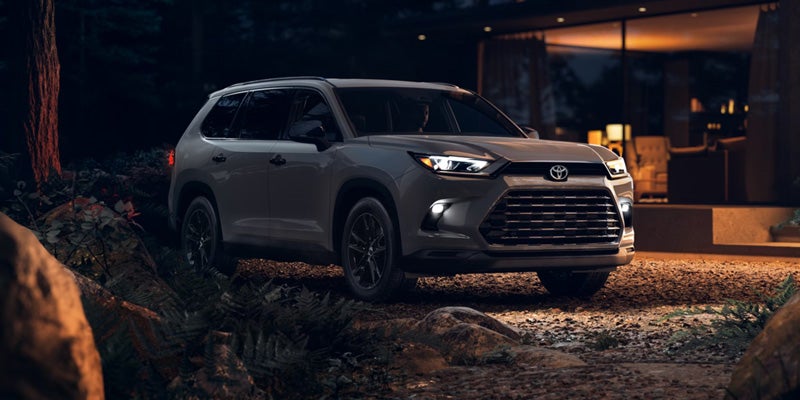
Toyota Grand Highlander

Toyota Hybrids in Sub-Zero Wyoming Winters: Real-World Battery, Cabin Heat, & 4WD Performance

Published by: Fremont Toyota Sheridan Technical Team • Location: Sheridan, Wyoming • Updated for: 2026 Winter Season Key Takeaway: Sub-Zero Toyota Hybrid Reliability Toyota hybrid and i-FORCE MAX vehicles perform exceptionally well in sub-zero Wyoming winters, routinely out-starting conventional gas vehicles at -25°F. Because Toyota hybrids use a 240V+ high-voltage traction battery and a high-torque electric motor-generator (MG1) to spin the engine at over 1,000 RPM, they eliminate the sluggish cranking common with conventional 12-volt starters. While drivers should anticipate a temporary 15% to 25% drop in winter fuel economy due to cabin heating and winter-blend fuels, electronic on-demand all-wheel drive (e-AWD) provides instantaneous traction across snow-packed highways and icy mountain passes. For drivers living along the eastern slope of the Bighorn Mountains—from Sheridan and Ranchester to Buffalo and Gillette, winter is not just a season; it is an endurance test for motor vehicles. When temperatures drop below zero and high-elevation winds whip snow across Interstate 90 and US-14, vehicle reliability becomes a matter of personal safety. One of the most frequent questions our service advisors and sales consultants hear at Fremont Toyota Sheridan is: "Can a hybrid really handle a brutal Wyoming winter?" Lingering skepticism from early-generation hybrids has led some drivers to believe that battery packs fail in extreme cold, cabins stay frigid, and electric all-wheel drive cannot match mechanical 4x4 systems. Below, our certified technicians break down the engineering reality of how modern Toyota Hybrid Synergy Drive and i-FORCE MAX powertrains operate in deep-freeze conditions. 1. Cold-Start Engineering: Why Toyota Hybrids Start Faster at -25°F In a conventional gasoline vehicle, starting an engine at -20°F requires a small, lead-acid 12-volt battery to crank a mechanical starter motor against freezing, viscous motor oil. In sub-zero cold, a 12V battery loses up to 50% of its cranking amperage, resulting in the dreaded slow, groaning crank that often leaves drivers stranded. Toyota hybrids operate on an entirely different starting architecture: No Traditional 12V Starter Motor: Toyota hybrids do not have a conventional starter motor or alternator. Instead, the internal combustion engine is cranked by Motor-Generator 1 (MG1). High-Voltage Power (240V+): MG1 is powered by the hybrid traction battery (Nickel-Metal Hydride or Lithium-Ion), delivering massive electrical wattage compared to a standard 12V battery. Instant 1,000 RPM Cranking: Rather than slowly churning at 200–250 RPM, MG1 spins the engine up to over 1,000 RPM in a fraction of a second before injecting fuel and spark. This immediate rotational velocity creates rapid compression heat inside the cylinders, producing virtually instantaneous sub-zero ignition. The Role of the 12-Volt Auxiliary Battery Toyota hybrids still contain a small 12-volt auxiliary battery, but its sole purpose is to boot up the vehicle's electronic control computers (ECUs) and energize the high-voltage relays. Because it never has to physically crank the engine, it experiences significantly less mechanical strain during winter cold starts. 2. Cabin Heat and Defrosting: Dispelling the Frigid Interior Myth A common misconception is that because hybrid engines shut off frequently, the heater core cannot produce adequate warm air in sub-zero temperatures. In reality, Toyota hybrid thermal management systems are specifically calibrated for cold-weather climates: Automatic Engine Operation: When cabin heating or windshield defrosting is requested and ambient temperatures are low, the hybrid ECU commands the gasoline engine to run continuously until the coolant reaches full operating temperature (typically 150°F–180°F). Exhaust Heat Recirculation System (EHRS): Most modern Toyota hybrids feature an exhaust heat exchanger that routes hot exhaust gases around the engine coolant lines during startup. This cuts engine warm-up time in half, delivering blowing cabin heat within minutes of driving. Electric PTC Supplemental Heaters: Higher trim levels of models like the RAV4 Prime and Highlander Hybrid incorporate Positive Temperature Coefficient (PTC) ceramic heating elements that warm incoming cabin air electrically before engine coolant is fully heated. 3. Winter MPG Realities: What Fuel Economy Should You Expect? It is important to maintain realistic expectations regarding winter fuel economy. In Northern Wyoming winter driving, hybrid owners typically observe a 15% to 25% decrease in MPG between December and March. For example: A Toyota RAV4 Hybrid averaging 38–40 MPG in summer will typically return 30–33 MPG during sub-zero months. A Toyota Tundra i-FORCE MAX averaging 20–22 MPG in summer may return 17–19 MPG in winter towing and highway commutes. Why does this drop occur? Cabin Heating Demands: The engine must run longer at idle and low speeds simply to provide thermal energy for the heater core. Winter-Blend Gasoline: Wyoming fuel distributors switch to winter-blend fuel containing higher butane ratios, which has roughly 1.5% to 3% lower energy density per gallon. Aerodynamic Drag & Rolling Resistance: Frigid sub-zero air is significantly denser than summer air, increasing highway aerodynamic drag. Plowing through slush and packed snow increases rolling friction on tires. Battery Thermodynamic Efficiency: Cold electrochemical cells exhibit higher internal resistance, prompting the battery management system to charge and discharge at slightly reduced rates until the pack reaches operating temperature. Even with this seasonal drop, a Toyota hybrid remains substantially more efficient than its non-hybrid equivalent under identical winter conditions. 4. Electronic All-Wheel Drive (e-AWD) vs. Mechanical 4x4 Toyota utilizes two primary all-wheel-drive architectures across its hybrid vehicle portfolio. Understanding the difference is vital for Wyoming driving: System Architecture Toyota Models Operating Mechanism Wyoming Road Capability Electronic On-Demand AWD (e-AWD) RAV4 Hybrid, Highlander Hybrid, Grand Highlander Hybrid, Sienna, Camry AWD Independent rear electric motor-generator (no driveshaft connecting front and rear axles). Automatically delivers instant rear torque when front slip is detected. Outstanding on icy roads, snow-packed highways, and slushy town streets. Zero mechanical latency. Mechanical 4WD with i-FORCE MAX Tundra Hybrid, Sequoia, Tacoma Hybrid, Land Cruiser, 4Runner Hybrid Heavy-duty transfer case, locking center/rear differentials, and low-range gearing with the hybrid motor sandwiched between engine and transmission. Maximum off-road, deep unplowed snow, steep mountain passes, and heavy winter towing across the Bighorns. 5. Certified Winter Hybrid Maintenance Checklist To ensure your Toyota hybrid delivers uninterrupted performance throughout a Wyoming winter, our certified service team recommends three key maintenance steps: Dual Cooling Circuit Inspection: Toyota hybrids utilize two separate cooling loops, one for the internal combustion engine and one for the inverter/converter assembly. Both use Toyota Super Long Life Coolant (SLLC) and must be tested for proper freeze protection down to -35°F. High-Voltage Battery Cooling Vent Care: Located beneath the rear seats or cargo area in most models, the hybrid battery intake vent must be kept clear of winter coats, blankets, and pet hair to ensure adequate airflow. Winter Tire Installation: All-wheel drive provides acceleration traction, but winter tires provide steering and stopping control on ice. Pairing Toyota’s e-AWD or i-FORCE MAX 4WD with Three-Peak Mountain Snowflake (3PMSF) certified tires delivers the ultimate cold-weather setup. Ownership Protection: Fremont Care When you purchase an eligible new or Fremont Certified Pre-Owned Toyota hybrid at Fremont Toyota Sheridan, your vehicle comes with the Fremont Care maintenance plan. This coverage provides 2 oil changes and 2 tire rotations performed by factory-certified technicians within your initial 12 months of ownership. Frequently Asked Questions: Toyota Hybrids in Wyoming Winter Will a Toyota hybrid battery freeze solid if left parked outside in Sheridan at -20°F? No. Both Toyota Nickel-Metal Hydride (NiMH) and Lithium-Ion traction battery packs are engineered to withstand temperatures well below -30°F without freezing. The electrolyte solution used in Toyota hybrid cells has a freezing point far below typical winter weather. Can you jump-start a Toyota hybrid if the 12-volt battery dies? Yes. Under the hood, Toyota provides dedicated positive and negative jump-start terminals inside the engine fuse box. You can jump-start the 12V auxiliary system using a standard booster pack or jumper cables from another vehicle to energize the computers and start the hybrid system. Do Toyota hybrids have block heaters available for winter in Wyoming? Yes. Genuine Toyota engine block heaters are available and can be installed by our certified technicians at Fremont Toyota Sheridan. Plugging in an engine block heater on sub-zero nights reduces warm-up time, lowers initial engine wear, and produces cabin heat almost immediately. Are Toyota hybrid brakes affected by winter road salt and magnesium chloride? Because Toyota hybrids utilize regenerative braking, the mechanical brake pads and rotors are used less frequently than in traditional cars. On winter roads treated with magnesium chloride, our technicians recommend regular high-pressure undercarriage washes and periodic brake caliper slide lubrication to prevent salt-induced corrosion. Browse New Toyota Hybrid Inventory Schedule Winter Maintenance in Sheridan

2026 Toyota 4Runner vs Nissan Pathfinder

Selecting a dependable sport utility vehicle requires looking past basic specifications to see how a model handles real-world driving. This head-to-head comparison examines the rugged capability of the new 2026 Toyota 4Runner against the family-focused Nissan Pathfinder. We will explore how these two popular options match up in terms of value, interior space, powertrain performance, and long-term durability. Table of Contents Which SUV Offers Better Value: 4Runner and Pathfinder Pricing and Trim Comparison Which SUV Fits Your Gear Better: Cargo and Passenger Space Analysis How Do the 4Runner and Pathfinder Compare on Mountain and Plains Terrain? Which SUV Is More Efficient for Long Wyoming Commutes? Which Tech and Safety Features Keep Your Family Connected and Protected? How Do Local Service Support and Warranty Coverage Compare? Frequently Asked Questions: Comparing the 2026 Toyota 4Runner and Nissan Pathfinder Why the 2026 Toyota 4Runner Is the Superior Choice Why Buffalo Families and Adventurers Compare the 4Runner and Pathfinder Living near the foothills of the Bighorn Mountains demands a vehicle that behaves less like a delicate city cruiser and more like a dependable workhorse. Families and outdoor enthusiasts in Buffalo frequently find themselves deciding between these two midsize SUVs because both offer the promise of weekend escape. However, the engineering philosophies behind them could not be more different. The Toyota 4Runner remains steadfast in its commitment to body-on-frame construction, utilizing a high-strength boxed-steel ladder frame. This truck-based heritage means it can comfortably traverse rocky trails, muddy ranch roads, and deep winter snowdrifts without compromising its structural integrity. Trims like the TRD Off-Road Premium and the overland ready Trailhunter are specifically designed for those who value durability and mechanical toughness. On the other hand, the Nissan Pathfinder utilizes a car-based unibody design. While this crossover configuration offers a car-like ride on smooth pavement, it lacks the heavy-duty underbody protection and suspension articulation required for rugged mountain terrain. The Pathfinder Rock Creek trim attempts to bridge this gap with all-terrain tires and a slightly modified suspension, but it still lacks the traditional low-range transfer case and locking rear differential found on the 4Runner. For local drivers who balance daily chores with demanding outdoor recreation, the 4Runner provides the peace of mind that only a true off-road machine can deliver. Which SUV Offers Better Value: 4Runner and Pathfinder Pricing and Trim Comparison A quick look at the starting figures reveals a clear distinction in how these manufacturers position their vehicles. The entry-level Toyota 4Runner SR5 starts at $42,070, representing a premium over the base Nissan Pathfinder S which begins at $37,500. As you climb the trim ladders, the 4Runner offers specialized packages and equipment tailored to specific lifestyles, including the athletic TRD Sport at $48,550, the trail-ready TRD Off-Road at $50,490, and the luxurious Limited at $56,700. For buyers seeking the pinnacle of off-road performance and premium comfort, the 4Runner lineup extends to the high-end Platinum at $64,160, the iconic TRD Pro at $67,900, and the ultimate adventure-ready Trailhunter at $68,200. Nissan caps its Pathfinder lineup with the Platinum trim at $49,790. While the Pathfinder presents a lower initial purchase price, the 4Runner justifies its premium through long-term value, exceptional resale performance, and robust standard equipment. To help make this investment fit your household budget, our team can help you value your trade-in to apply the equity of your current vehicle toward a new purchase. Investing in a vehicle built on a high-strength ladder frame means fewer costly suspension repairs over years of heavy use on demanding back roads. Pricing Manufacturer-listed pricing per trim, across compared vehicles. 2026 Toyota 4Runner Trim MSRP 2026 Nissan Pathfinder Trim MSRP SR5 $42,070 S $37,500 TRD Sport $48,550 SV $39,990 TRD Off-Road $50,490 SL $42,590 TRD Sport Premium $53,910 Rock Creek $45,090 TRD Off-Road Premium $55,770 Platinum $49,790 Which SUV Fits Your Gear Better: Cargo and Passenger Space Analysis Imagine loading up early on a Saturday morning for a weekend of camping and fishing. This scenario is where cargo volume and payload capacity become the most critical specs on the sheet. The Toyota 4Runner is designed to maximize utility, offering a generous about 48 cu ft of cargo space behind the second row of seats. This cavernous area easily accommodates large coolers, heavy gear bags, and outdoor equipment. In contrast, the Nissan Pathfinder prioritizes passenger count over raw cargo utility. It offers seating for up to 8 passengers, but this third-row configuration reduces the available cargo space to a tight about 17 cu ft when all seats are occupied. This layout might work well for carpooling kids around Gillette, but it quickly falls short when you need to haul bulky supplies or outdoor gear. Furthermore, the 4Runner boasts a robust payload capacity of 895 lbs on select trims, allowing you to carry heavy loads safely. Its interior features durable, easy-to-clean materials like SofTex upholstery on the TRD Off-Road Premium and TRD Pro trims, ensuring the cabin can handle muddy boots and wet dogs without showing wear. The 4Runner also retains its signature roll-down power rear window, a practical feature that allows you to access the cargo area quickly or carry longer items like lumber or fishing rods with ease. Dimensions & Capacity Capacity and dimensions by trim Specification 2026 Toyota 4Runner 2026 Nissan Pathfinder Seating 5 8 Cargo 48.4 cu ft 16.6 cu ft Curb weight 4,730 lbs 4,489 lbs Towing 6,000 lbs 6,000 lbs How Do the 4Runner and Pathfinder Compare on Mountain and Plains Terrain? Are you looking for an SUV that delivers effortless pulling power when climbing steep mountain grades? The powertrain specifications of these two vehicles reveal a significant difference in how they deliver performance. The Toyota 4Runner is powered by a modern 2.4L turbocharged four-cylinder engine that produces 278 hp and a stout 317 lb-ft of torque, paired with a smooth-shifting 8-speed automatic transmission. The Nissan Pathfinder utilizes a larger 3.5L naturally aspirated V6 engine making 284 hp and 259 lb-ft of torque, mated to a 9-speed automatic transmission. While the horsepower numbers are comparable, the crucial difference lies in the torque. The 4Runner delivers its peak torque of 317 lb-ft at a low engine speed, providing immediate, muscular acceleration that is highly beneficial when towing a heavy trailer or crawling over obstacles. Drivetrain configuration also plays a major role in how these vehicles handle demanding terrain. The 4Runner comes standard with Rear-wheel drive and offers an advanced part-time or full-time four-wheel-drive system with a two-speed transfer case. The Pathfinder comes standard with Front-wheel drive and offers an available all-wheel-drive system. For navigating steep dirt roads, rocky trails, and deep winter snow drifts, the 4Runner's traditional mechanical four-wheel-drive system is far more dependable and capable than the Pathfinder's road-biased setup. Engine & Performance Powertrain specs by trim Specification 2026 Toyota 4Runner 2026 Nissan Pathfinder Engine 2.4L 3.5L Transmission 8-speed automatic 9-speed automatic Horsepower 278 hp 284 hp Torque 317 lb-ft 259 lb-ft Drivetrain Rear-wheel drive Front-wheel drive Which SUV Is More Efficient for Long Wyoming Commutes? Some drivers assume that choosing a highly capable, body-on-frame SUV means sacrificing fuel economy at the pump. However, modern engineering has allowed the 2026 Toyota 4Runner to deliver competitive efficiency alongside its legendary toughness. The standard gas-powered 4Runner achieves 20 city / 24 hwy / 22 combined MPG, allowing you to cover long distances between fill-ups. The Nissan Pathfinder offers comparable fuel economy, with ratings of 21 city / 27 hwy / 23 combined MPG on standard configurations. While the Pathfinder holds a slight edge on highway efficiency, the 4Runner closes the gap significantly when equipped with its advanced hybrid powertrain. The 4Runner Platinum and TRD Pro trims feature the i-FORCE MAX hybrid system, which pairs the turbocharged engine with an electric motor and a 1.87 kWh battery. This hybrid setup boosts output to 326 hp and 465 lb-ft of torque while maintaining an impressive 23 city / 24 hwy / 23 combined MPG. If you want to experience this impressive blend of power and efficiency firsthand, you can easily schedule a test drive in a new vehicle or browse our selection to schedule a test drive in a used vehicle at our dealership. Fuel Economy Fuel economy and range by trim Specification 2026 Toyota 4Runner 2026 Nissan Pathfinder MPG 20 city / 24 hwy / 22 combined 21 city / 27 hwy / 23 combined Which Tech and Safety Features Keep Your Family Connected and Protected? A modern cabin should serve as a comfortable, connected mobile command center during long road trips. The Toyota 4Runner excels in this area by offering practical, easy-to-use technology that enhances your driving experience. Standard trims feature an 8-inch touchscreen, while premium trims upgrade to a massive 14-inch Toyota Audio Multimedia touchscreen display. This system features wireless Apple CarPlay and Android Auto compatibility, allowing you to access navigation and music without messy cords. Toyota also offers convenient connected technology through the optional Connected Services Trial Offering. Packages like 1Y and 1X provide additional years of Drive Connect and Remote Connect subscriptions, allowing you to start your vehicle, lock or unlock doors, and monitor vehicle status directly from your smartphone. Safety is equally paramount, and the 4Runner comes standard with Toyota Safety Sense 3.0. This comprehensive suite of active safety features includes a Pre-Collision System with Pedestrian Detection, Lane Departure Alert with Steering Assist, and Full-Speed Range Dynamic Radar Cruise Control. These systems work together seamlessly to help you stay centered in your lane, maintain a safe distance from other vehicles, and avoid potential hazards during your daily travels. How Do Local Service Support and Warranty Coverage Compare? When I'm helping folks choose a long-term vehicle, I always emphasize that the purchase is just the beginning of the ownership journey. Every new Toyota vehicle is backed by a comprehensive manufacturer warranty package, which includes a 3-year/36,000-mile basic warranty and a 5-year/60,000-mile powertrain warranty. Additionally, Toyota hybrid models receive specialized coverage for hybrid-related components. To keep your vehicle running at its best through every season, our certified technicians are here to provide expert care. You can easily schedule a service appointment online for routine maintenance, oil changes, or tire rotations. For added peace of mind on remote roads, Toyota includes a comprehensive roadside assistance program. If you ever experience a flat tire, a dead battery, or an unexpected breakdown, help is just a phone call away via the official toll-free line: Toyota Roadside Assistance: 1-800-331-4331. This manufacturer-backed service ensures that your vehicle is cared for by authorized technicians using genuine Toyota parts, preserving your warranty and vehicle performance. Frequently Asked Questions: Comparing the 2026 Toyota 4Runner and Nissan Pathfinder Choosing the right SUV for your household involves balancing multiple priorities, from daily commuting costs to weekend towing needs. To help you make an informed decision, we have compiled answers to some of the most common questions we hear from local shoppers. Is the Toyota 4Runner worth the price premium over the Nissan Pathfinder? Yes, the 4Runner's premium is justified by its heavy-duty body-on-frame construction, superior off-road capability, and historically high resale value. While the Pathfinder S starts at a lower price point, the 4Runner SR5 at $42,070 offers a much more durable platform that is built to withstand rugged road conditions and heavy towing demands over the long haul. Which SUV has more cargo space for outdoor gear? The Toyota 4Runner is the clear winner for cargo utility, providing about 48 cu ft of space behind the second row. The Nissan Pathfinder only offers about 17 cu ft behind its third row, making it much more difficult to pack large gear, coolers, and luggage for family trips. Which vehicle is better suited for towing trailers and ATVs? While both vehicles have a maximum towing capacity of 6,000 lbs on select configurations, the Toyota 4Runner's turbocharged engine delivers 317 lb-ft of torque at low RPMs, providing much better pulling power and control when hauling heavy loads up steep mountain passes. How can I experience these vehicles firsthand? We invite you to visit our showroom and speak with our knowledgeable team. You can find our showroom at 1614 Coffeen Ave in plain view, or you can give our sales department a call directly at (307) 763-5619 to ask questions or set up a personal consultation. Why the 2026 Toyota 4Runner Is the Superior Choice Now you know you've read the specs on the 2026 Toyota 4Runner vs Nissan Pathfinder. While the Nissan Pathfinder serves as a comfortable, road-biased crossover for larger families who need eight seats, the 2026 Toyota 4Runner is the superior overall choice for drivers who require genuine capability and long-term durability. With its robust body-on-frame construction, powerful turbocharged engine, and generous cargo capacity, the 4Runner is uniquely built to handle both the daily grind and the most demanding outdoor adventures. We invite you to visit Fremont Toyota Sheridan today to explore our inventory, speak with our friendly team, and experience the legendary toughness of the Toyota 4Runner firsthand. © 2026 Fremont Toyota Sheridan. All rights reserved.

Contact Us

Fill out this form below and we'll contact you shortly
*Required Fields