


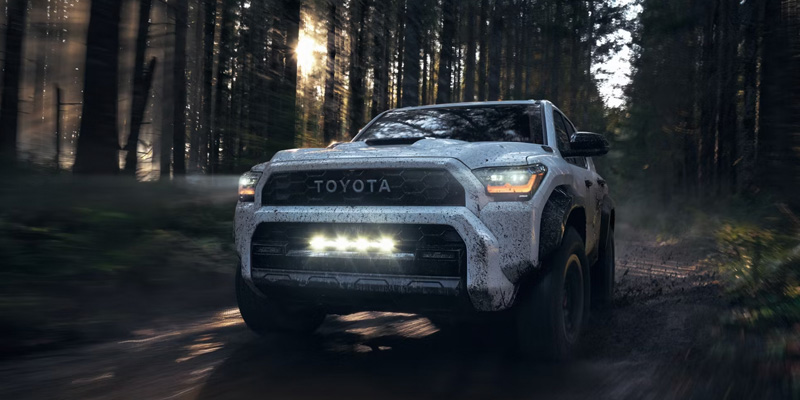
Selecting a dependable sport utility vehicle requires looking past basic specifications to see how a model handles real-world driving. This head-to-head comparison examines the rugged capability of the new 2026 Toyota 4Runner against the family-focused Nissan Pathfinder. We will explore how these two popular options match up in terms of value, interior space, powertrain performance, and long-term durability.
Table of Contents
- Which SUV Offers Better Value: 4Runner and Pathfinder Pricing and Trim Comparison
- Which SUV Fits Your Gear Better: Cargo and Passenger Space Analysis
- How Do the 4Runner and Pathfinder Compare on Mountain and Plains Terrain?
- Which SUV Is More Efficient for Long Wyoming Commutes?
- Which Tech and Safety Features Keep Your Family Connected and Protected?
- How Do Local Service Support and Warranty Coverage Compare?
- Frequently Asked Questions: Comparing the 2026 Toyota 4Runner and Nissan Pathfinder
- Why the 2026 Toyota 4Runner Is the Superior Choice
Why Buffalo Families and Adventurers Compare the 4Runner and Pathfinder
Living near the foothills of the Bighorn Mountains demands a vehicle that behaves less like a delicate city cruiser and more like a dependable workhorse. Families and outdoor enthusiasts in Buffalo frequently find themselves deciding between these two midsize SUVs because both offer the promise of weekend escape. However, the engineering philosophies behind them could not be more different.
The Toyota 4Runner remains steadfast in its commitment to body-on-frame construction, utilizing a high-strength boxed-steel ladder frame. This truck-based heritage means it can comfortably traverse rocky trails, muddy ranch roads, and deep winter snowdrifts without compromising its structural integrity. Trims like the TRD Off-Road Premium and the overland ready Trailhunter are specifically designed for those who value durability and mechanical toughness.
On the other hand, the Nissan Pathfinder utilizes a car-based unibody design. While this crossover configuration offers a car-like ride on smooth pavement, it lacks the heavy-duty underbody protection and suspension articulation required for rugged mountain terrain. The Pathfinder Rock Creek trim attempts to bridge this gap with all-terrain tires and a slightly modified suspension, but it still lacks the traditional low-range transfer case and locking rear differential found on the 4Runner. For local drivers who balance daily chores with demanding outdoor recreation, the 4Runner provides the peace of mind that only a true off-road machine can deliver.
Which SUV Offers Better Value: 4Runner and Pathfinder Pricing and Trim Comparison
A quick look at the starting figures reveals a clear distinction in how these manufacturers position their vehicles. The entry-level Toyota 4Runner SR5 starts at $42,070, representing a premium over the base Nissan Pathfinder S which begins at $37,500. As you climb the trim ladders, the 4Runner offers specialized packages and equipment tailored to specific lifestyles, including the athletic TRD Sport at $48,550, the trail-ready TRD Off-Road at $50,490, and the luxurious Limited at $56,700.
For buyers seeking the pinnacle of off-road performance and premium comfort, the 4Runner lineup extends to the high-end Platinum at $64,160, the iconic TRD Pro at $67,900, and the ultimate adventure-ready Trailhunter at $68,200. Nissan caps its Pathfinder lineup with the Platinum trim at $49,790.
While the Pathfinder presents a lower initial purchase price, the 4Runner justifies its premium through long-term value, exceptional resale performance, and robust standard equipment. To help make this investment fit your household budget, our team can help you value your trade-in to apply the equity of your current vehicle toward a new purchase. Investing in a vehicle built on a high-strength ladder frame means fewer costly suspension repairs over years of heavy use on demanding back roads.
Pricing
Manufacturer-listed pricing per trim, across compared vehicles.
| 2026 Toyota 4Runner Trim | MSRP | 2026 Nissan Pathfinder Trim | MSRP |
|---|---|---|---|
| SR5 | $42,070 | S | $37,500 |
| TRD Sport | $48,550 | SV | $39,990 |
| TRD Off-Road | $50,490 | SL | $42,590 |
| TRD Sport Premium | $53,910 | Rock Creek | $45,090 |
| TRD Off-Road Premium | $55,770 | Platinum | $49,790 |
Which SUV Fits Your Gear Better: Cargo and Passenger Space Analysis
Imagine loading up early on a Saturday morning for a weekend of camping and fishing. This scenario is where cargo volume and payload capacity become the most critical specs on the sheet. The Toyota 4Runner is designed to maximize utility, offering a generous about 48 cu ft of cargo space behind the second row of seats. This cavernous area easily accommodates large coolers, heavy gear bags, and outdoor equipment.
In contrast, the Nissan Pathfinder prioritizes passenger count over raw cargo utility. It offers seating for up to 8 passengers, but this third-row configuration reduces the available cargo space to a tight about 17 cu ft when all seats are occupied. This layout might work well for carpooling kids around Gillette, but it quickly falls short when you need to haul bulky supplies or outdoor gear.
Furthermore, the 4Runner boasts a robust payload capacity of 895 lbs on select trims, allowing you to carry heavy loads safely. Its interior features durable, easy-to-clean materials like SofTex upholstery on the TRD Off-Road Premium and TRD Pro trims, ensuring the cabin can handle muddy boots and wet dogs without showing wear. The 4Runner also retains its signature roll-down power rear window, a practical feature that allows you to access the cargo area quickly or carry longer items like lumber or fishing rods with ease.
Dimensions & Capacity
Capacity and dimensions by trim
| Specification | 2026 Toyota 4Runner | 2026 Nissan Pathfinder |
|---|---|---|
| Seating | 5 | 8 |
| Cargo | 48.4 cu ft | 16.6 cu ft |
| Curb weight | 4,730 lbs | 4,489 lbs |
| Towing | 6,000 lbs | 6,000 lbs |
How Do the 4Runner and Pathfinder Compare on Mountain and Plains Terrain?
Are you looking for an SUV that delivers effortless pulling power when climbing steep mountain grades? The powertrain specifications of these two vehicles reveal a significant difference in how they deliver performance. The Toyota 4Runner is powered by a modern 2.4L turbocharged four-cylinder engine that produces 278 hp and a stout 317 lb-ft of torque, paired with a smooth-shifting 8-speed automatic transmission.
The Nissan Pathfinder utilizes a larger 3.5L naturally aspirated V6 engine making 284 hp and 259 lb-ft of torque, mated to a 9-speed automatic transmission. While the horsepower numbers are comparable, the crucial difference lies in the torque. The 4Runner delivers its peak torque of 317 lb-ft at a low engine speed, providing immediate, muscular acceleration that is highly beneficial when towing a heavy trailer or crawling over obstacles.
Drivetrain configuration also plays a major role in how these vehicles handle demanding terrain. The 4Runner comes standard with Rear-wheel drive and offers an advanced part-time or full-time four-wheel-drive system with a two-speed transfer case. The Pathfinder comes standard with Front-wheel drive and offers an available all-wheel-drive system. For navigating steep dirt roads, rocky trails, and deep winter snow drifts, the 4Runner’s traditional mechanical four-wheel-drive system is far more dependable and capable than the Pathfinder’s road-biased setup.
Engine & Performance
Powertrain specs by trim
| Specification | 2026 Toyota 4Runner | 2026 Nissan Pathfinder |
|---|---|---|
| Engine | 2.4L | 3.5L |
| Transmission | 8-speed automatic | 9-speed automatic |
| Horsepower | 278 hp | 284 hp |
| Torque | 317 lb-ft | 259 lb-ft |
| Drivetrain | Rear-wheel drive | Front-wheel drive |
Which SUV Is More Efficient for Long Wyoming Commutes?
Some drivers assume that choosing a highly capable, body-on-frame SUV means sacrificing fuel economy at the pump. However, modern engineering has allowed the 2026 Toyota 4Runner to deliver competitive efficiency alongside its legendary toughness. The standard gas-powered 4Runner achieves 20 city / 24 hwy / 22 combined MPG, allowing you to cover long distances between fill-ups.
The Nissan Pathfinder offers comparable fuel economy, with ratings of 21 city / 27 hwy / 23 combined MPG on standard configurations. While the Pathfinder holds a slight edge on highway efficiency, the 4Runner closes the gap significantly when equipped with its advanced hybrid powertrain.
The 4Runner Platinum and TRD Pro trims feature the i-FORCE MAX hybrid system, which pairs the turbocharged engine with an electric motor and a 1.87 kWh battery. This hybrid setup boosts output to 326 hp and 465 lb-ft of torque while maintaining an impressive 23 city / 24 hwy / 23 combined MPG. If you want to experience this impressive blend of power and efficiency firsthand, you can easily schedule a test drive in a new vehicle or browse our selection to schedule a test drive in a used vehicle at our dealership.
Fuel Economy
Fuel economy and range by trim
| Specification | 2026 Toyota 4Runner | 2026 Nissan Pathfinder |
|---|---|---|
| MPG | 20 city / 24 hwy / 22 combined | 21 city / 27 hwy / 23 combined |
Which Tech and Safety Features Keep Your Family Connected and Protected?
A modern cabin should serve as a comfortable, connected mobile command center during long road trips. The Toyota 4Runner excels in this area by offering practical, easy-to-use technology that enhances your driving experience. Standard trims feature an 8-inch touchscreen, while premium trims upgrade to a massive 14-inch Toyota Audio Multimedia touchscreen display. This system features wireless Apple CarPlay and Android Auto compatibility, allowing you to access navigation and music without messy cords.
Toyota also offers convenient connected technology through the optional Connected Services Trial Offering. Packages like 1Y and 1X provide additional years of Drive Connect and Remote Connect subscriptions, allowing you to start your vehicle, lock or unlock doors, and monitor vehicle status directly from your smartphone.
Safety is equally paramount, and the 4Runner comes standard with Toyota Safety Sense 3.0. This comprehensive suite of active safety features includes a Pre-Collision System with Pedestrian Detection, Lane Departure Alert with Steering Assist, and Full-Speed Range Dynamic Radar Cruise Control. These systems work together seamlessly to help you stay centered in your lane, maintain a safe distance from other vehicles, and avoid potential hazards during your daily travels.
How Do Local Service Support and Warranty Coverage Compare?
When I’m helping folks choose a long-term vehicle, I always emphasize that the purchase is just the beginning of the ownership journey. Every new Toyota vehicle is backed by a comprehensive manufacturer warranty package, which includes a 3-year/36,000-mile basic warranty and a 5-year/60,000-mile powertrain warranty. Additionally, Toyota hybrid models receive specialized coverage for hybrid-related components.
To keep your vehicle running at its best through every season, our certified technicians are here to provide expert care. You can easily schedule a service appointment online for routine maintenance, oil changes, or tire rotations.
For added peace of mind on remote roads, Toyota includes a comprehensive roadside assistance program. If you ever experience a flat tire, a dead battery, or an unexpected breakdown, help is just a phone call away via the official toll-free line: Toyota Roadside Assistance: 1-800-331-4331. This manufacturer-backed service ensures that your vehicle is cared for by authorized technicians using genuine Toyota parts, preserving your warranty and vehicle performance.
Frequently Asked Questions: Comparing the 2026 Toyota 4Runner and Nissan Pathfinder
Choosing the right SUV for your household involves balancing multiple priorities, from daily commuting costs to weekend towing needs. To help you make an informed decision, we have compiled answers to some of the most common questions we hear from local shoppers.
Is the Toyota 4Runner worth the price premium over the Nissan Pathfinder?
Yes, the 4Runner’s premium is justified by its heavy-duty body-on-frame construction, superior off-road capability, and historically high resale value. While the Pathfinder S starts at a lower price point, the 4Runner SR5 at $42,070 offers a much more durable platform that is built to withstand rugged road conditions and heavy towing demands over the long haul.
Which SUV has more cargo space for outdoor gear?
The Toyota 4Runner is the clear winner for cargo utility, providing about 48 cu ft of space behind the second row. The Nissan Pathfinder only offers about 17 cu ft behind its third row, making it much more difficult to pack large gear, coolers, and luggage for family trips.
Which vehicle is better suited for towing trailers and ATVs?
While both vehicles have a maximum towing capacity of 6,000 lbs on select configurations, the Toyota 4Runner’s turbocharged engine delivers 317 lb-ft of torque at low RPMs, providing much better pulling power and control when hauling heavy loads up steep mountain passes.
How can I experience these vehicles firsthand?
We invite you to visit our showroom and speak with our knowledgeable team. You can find our showroom at 1614 Coffeen Ave in plain view, or you can give our sales department a call directly at (307) 763-5619 to ask questions or set up a personal consultation.
Why the 2026 Toyota 4Runner Is the Superior Choice
Now you know you’ve read the specs on the 2026 Toyota 4Runner vs Nissan Pathfinder. While the Nissan Pathfinder serves as a comfortable, road-biased crossover for larger families who need eight seats, the 2026 Toyota 4Runner is the superior overall choice for drivers who require genuine capability and long-term durability. With its robust body-on-frame construction, powerful turbocharged engine, and generous cargo capacity, the 4Runner is uniquely built to handle both the daily grind and the most demanding outdoor adventures. We invite you to visit Fremont Toyota Sheridan today to explore our inventory, speak with our friendly team, and experience the legendary toughness of the Toyota 4Runner firsthand.


